A Pocket Notebook or a Voice Memo for Rural Reflection?
Choose a pocket notebook or voice memo for rural reflection by matching each format to your surroundings, available hands and comfort with sound or writing.
The common mistake with a pocket notebook or voice memo for rural reflection is treating either one as a place to store the whole walk. That can turn a passing moment into a task: you end up narrating every gate and gust, or filling a page when all you wanted was to notice the light.
Instead, choose the format that suits the moment and preserve one useful detail. A notebook is like a pocket-sized map: you can see the mark at a glance, while a voice memo keeps the sound of your thought but asks you to listen again.
A notebook and a voice memo hold different kinds of attention
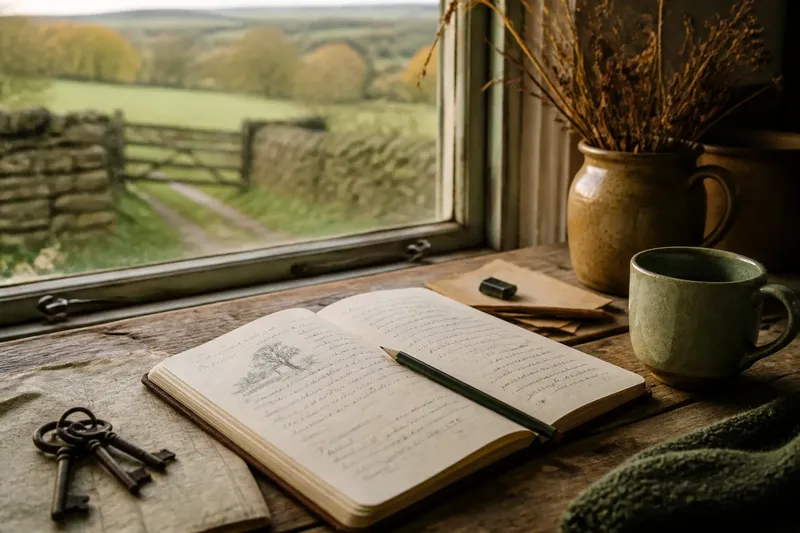
Writing gives you a visible pause. You can select a few words, add a rough line drawing of a field boundary, or leave a question unfinished. It suits a sheltered stop, a kitchen table, or any moment when you have a free hand and want to shape a thought as you make it.
Speaking can catch an observation before it slips away, especially when you are walking between jobs or carrying something. A recording preserves your phrasing and hesitations, but it may feel exposed if someone is within earshot. Only record when you can stop somewhere safe and speak without disturbing others.
Neither format needs to become a daily record. A small note can hold one detail—a gate left open, rain darkening the lane, or the smell of cut grass—without explaining what the whole day meant.
Choose according to the place and the thought
Before you begin, notice what the setting allows. In a shared kitchen, writing may be quieter than speaking; on a muddy path, a memo may be easier than balancing a notebook. If you are near traffic, livestock, machinery or other hazards, wait until you are safely still rather than handling a phone or writing while moving.
The thought itself can guide you, too. If you want to compare how a hedgerow looks from one visit to the next, a quick sketch or a few written words may be easier to scan. If you want to remember how you described a sudden change in weather, a short recording may retain the cadence of that moment.
Comfort is part of the choice. If handwriting tires your hand, make a shorter entry or use a pen that is easier to hold. If listening to your recorded voice bothers you, speak one sentence and leave it there—or choose paper instead.
Keep the record small and easy to handle
A useful note needs only enough detail to help you recognise the moment later. For a written entry, try a place and a sensory detail, such as “north gate—wet hawthorn smell”. For audio, say the place and the observation in one brief thought; a clear file name can help you find it again.
- If the notebook is damp or muddy, check whether the page will stay legible; if it will not, wait for shelter or make a shorter note on a dry surface.
- If your hands are occupied, check whether you can stop safely; if you can, record a brief memo, and if you cannot, wait until the task is finished.
- If someone nearby could overhear a personal recording, check whether you have a private place; if not, write a neutral note later or keep the thought unrecorded.
- If a notebook might be read by someone who shares your home, check where it will be stored; if that location is not private enough, leave out sensitive details or use a safer arrangement.
- If a voice memo has a vague file name, check whether you could identify its contents later; if not, rename it with a simple place or subject, or delete it if it has no use.
- If you are tempted to describe the whole walk, check what single detail you most want to remember; if one stands out, record only that, and if none does, let the moment pass without making an entry.
Handle privacy and later access differently
A notebook is quiet, but it is not automatically private. It may be left on a table or found in a coat pocket. Consider where it lives at home, and avoid writing details about another person that you would not want them to encounter.
A voice memo creates a digital file. Shared devices, account settings, notifications and lock-screen access can affect who might hear or see it, so check the relevant settings before recording sensitive thoughts. Decide whether to keep, rename or delete each memo rather than letting a pile of recordings accumulate by default.
Paper is usually quick to scan, while audio can take longer to search if its name is unclear or the recording wanders. A brief, specific title helps with either format: “lower field, wind shifted” is easier to recognise than “thoughts”. Neither needs to become a complete archive.
Which format suits this moment?
Is a notebook more private than a voice memo?
Not necessarily. A notebook can be found, and a recording can be exposed through device or account access; choose the storage arrangement you can manage comfortably and leave out sensitive details.
Which format is easier to find later?
A handwritten page can be scanned quickly, while a short, clearly named memo can be easy to replay. If you need to locate one observation among many, give the entry a place or subject that will mean something to you later.
Can I switch between paper and audio?
Yes. Use paper when you want to see or sketch a detail, and audio when speaking fits the moment better; there is no need to copy every entry into both formats.
What if neither feels right?
You can leave the moment unrecorded. If you want a marker, use a few words or a quick sketch later, when you have the privacy and attention to do so.
A short note can be enough
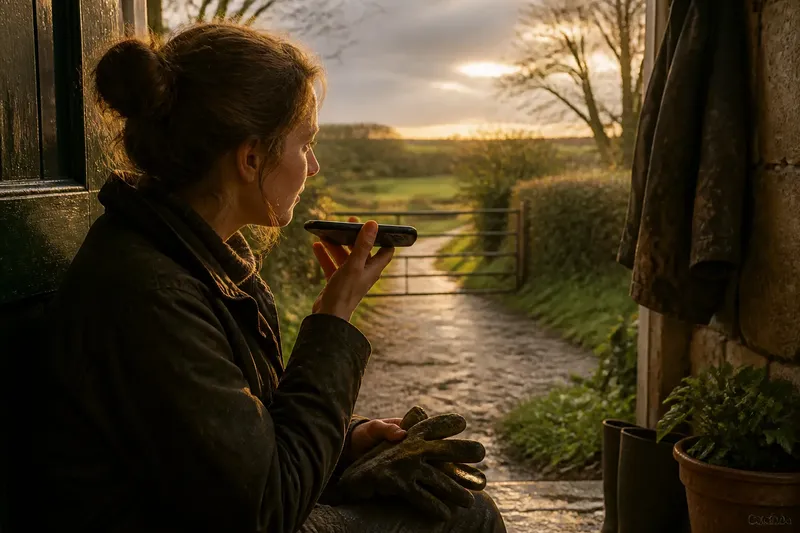
Say you come in from checking a hedgerow with wet gloves and want to remember a sudden strip of pale light beyond the trees. Your starting point is one observation and hands that are not ready for a notebook. You take the gloves off in the porch, check that the path is behind you and no one is close enough to hear, then record: “Pale light opened over the far field after the shower.” Later, you name the memo “hedgerow, light after rain”. The result is a retrievable thought, while the trade-off is that it does not preserve a sketch of where the light fell.
For pocket notebook or voice memo for rural reflection, the useful choice is the one that lets a small observation remain clear without taking you away from the place. Sometimes that means writing; sometimes it means speaking; sometimes attention itself is all you need to carry home.