The Three-Point Pause: Notice Sound, Sight and Sensation
The three-point pause gives a wandering mind a gentle return through one sound, one visible detail and one bodily sensation, woven into rural days.
The most common mistake with the three-point pause is trying to make the countryside quiet enough to concentrate. A passing tractor, wind in a hedge or restless thought can then feel like a failure, when the point is simply to notice what is already here. Choose one sound, one visible detail and one physical sensation; together, they give a wandering mind a gentle place to return.
The three-point pause works with the day you have
Rural attention is rarely made of postcard scenes. A lane can hold birdsong and a reversing alarm; a kitchen window can frame rain on a shed roof. The pause does not sort these into good and bad surroundings. It makes room for a small, specific encounter with the place and your body.
Think of the three points as a stool with three legs: each supports the pause, and none needs to carry the whole weight. Sound draws attention to what is happening around you. Sight gives it a particular shape. Sensation brings you back to the body that is doing the noticing.
This is not a test of concentration. Your mind may drift between points or start planning supper halfway through. When you notice that, return to whichever point feels easiest. The gentle return is part of the practice, not a detour from it.
Give the pause a place in an ordinary rural week
For a first week, attach the pause to familiar moments rather than adding a new appointment. Pick one reliable daily cue, such as putting the kettle on, closing a gate after a walk, or stepping out to collect the post. Choose a spot where you can stand or sit comfortably without obstructing work or a path.
- On the first day, use the cue once and spend a short while with sound. Name it plainly: a rook calling, water in a gutter, or the low hum of a boiler.
- On the second day, add one visible detail. Look for something particular, such as a pale leaf caught in a fence or a line of mud drying on a boot.
- On the third day, notice one physical sensation as well. It might be the warmth of a mug in your palms, the press of your feet on the floor, or cool air on your cheek.
- On the fourth day, try the full three points at your usual cue. Give each one a moment, then carry on with what you were doing.
- On the fifth day, use the routine in a different everyday place, such as the porch, a kitchen doorway or the edge of a yard. Keep the same three points, but let the surroundings change.
- On the sixth day, try a pause during a transition that tends to scatter your attention, perhaps before starting a household task. If the moment is too busy, leave it and choose another.
- On the seventh day, return to the spot or cue that felt easiest. Notice which point naturally brought your attention back, and let that be the first point next time.
This is a loose rhythm, not a streak to preserve. If a day slips by, pick up again at the next natural cue. Keep the pause brief enough to fit the life around it: it can happen in a few unhurried breaths, or last a little longer when the moment allows.
Notice each point without turning it into a task
For sound, choose one thing rather than trying to catalogue the whole landscape. A bird may call from a boundary tree; rain may tap a plastic trough. You can notice whether the sound is near or far, steady or intermittent, then leave it alone.
For sight, narrow the field to one detail. A broad view of fields can invite the mind to wander into errands or weather worries, while a single bead of water on a nettle stem offers a clear place to rest attention. You do not need to identify the plant or decide what the scene means.
For physical sensation, stay with something ordinary and easy to notice: a hand resting on a wooden sill, the weight of a coat on your shoulders, or the feel of gravel under a planted foot. Sensation means the body’s immediate experience, not an invitation to judge your posture or fix how you feel.
Say the points silently if words help: “wind in the ash, a red gate latch, my feet on the step.” If naming them makes you feel as though you are completing a form, drop the labels and simply notice each one. Use whichever way leaves more space for attention.
What can I notice when the place feels busy?
What if the only sound is machinery?
A fan, pump or distant vehicle can be the sound you notice. Attend to its quality or rhythm without requiring a natural sound to make the pause feel rural.
What if nothing catches my eye?
Let your gaze settle on an ordinary nearby detail, such as a door frame, a patch of damp ground or the rim of a cup. The aim is to see one thing as it appears, not to find something beautiful.
What if I feel distracted or restless?
Notice the sensation that is already present, such as a foot shifting or a hand tightening, without criticising it. Then return to a sound or visible detail if that feels easier.
Can I do the pause indoors?
Yes: notice a sound in the house, one visible feature in the room and a physical sensation such as your back against a chair. A window can bring the wider landscape into view, but it is not required.
Let weather and work shape the routine
Keep the cue, not the scenery, as the steady part of the week. On a wet morning, you might pause beside a window rather than stepping outside. During a busy stretch of farm or garden work, the pause can fit after washing your hands, when your body is already making a transition.
Safety and attention belong together. Do not pause while driving, handling machinery, crossing a road or doing any task that needs your eyes and hands. Choose a still moment, and adapt the routine to the place you are in and what is happening around you.
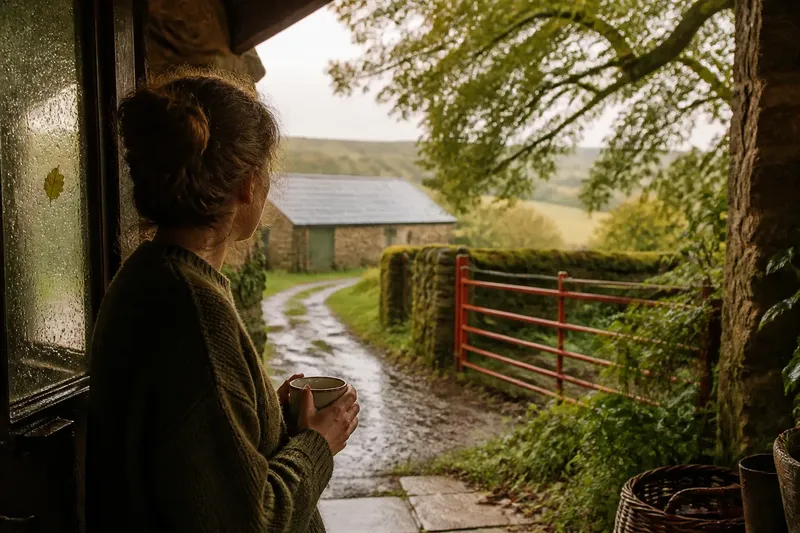
Say you are waiting for a kettle to boil after coming in from a muddy lane. You hear rain ticking against the porch roof, notice a leaf stuck to the glass, and feel warmth spreading through your hands around a mug. If your mind jumps to the jobs ahead, you can return to any one of those three details; the likely result is a clearer moment of contact with the kitchen and the body in it, not a promise that every thought will stop.
Keep the three-point pause light enough to return to
After a week, decide whether the cue fits your day. Keep it if it arrives naturally; change it if it repeatedly collides with work or family life. You can also favour one point for a while, then bring the other two back when attention feels less scattered.
The three-point pause is most useful when it stays modest. You are not collecting perfect sounds or proving that you can be present. You are making a small opening in an ordinary day, with sound, sight and sensation close at hand.
For a simple reminder, keep the phrase “one sound, one detail, one sensation” beside the place where your cue happens. Let the next pause begin with whatever the land, house or body is already offering.