The Myth of the Perfectly Quiet Mind
The perfectly quiet mind is a misleading goal. Learn how to notice thoughts, choose what deserves action and make room for attention outdoors.

The most common mistake in mindful attention is treating every thought as a failed attempt at calm. That perfectly quiet mind can turn a walk to the field gate into a private exam, costing you the chance to notice what you actually need: rest, a decision, or simply a moment outside.
Attention is not a method for controlling thought. It is the ability to notice what your mind is doing and decide whether to follow it, leave it for later or return to the activity in front of you. In rural settings, that choice matters because a thought may be private, while a sound or change in the surroundings may call for a practical response.
The perfectly quiet mind is the wrong measure of attention
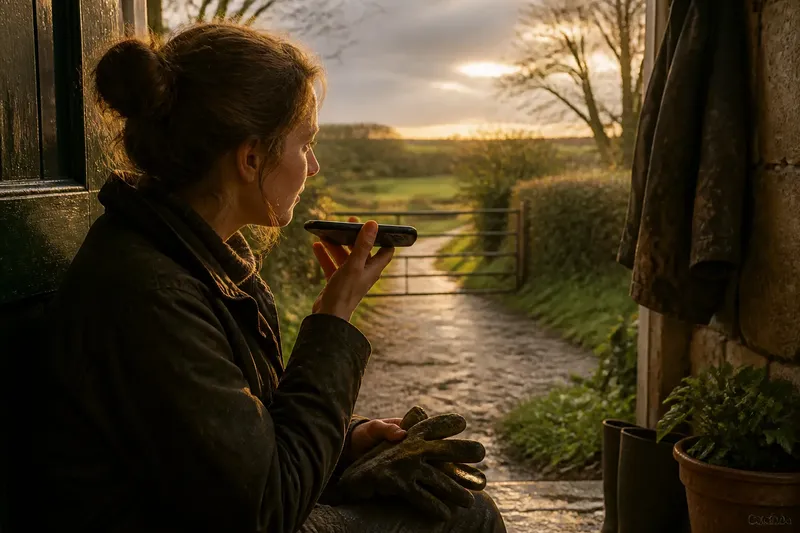
Imagine Rowan, who lives near a small village and walks to a familiar field gate after a busy day. The hedge is damp, a tractor is audible beyond the rise, and Rowan is thinking about an unanswered message.
At first, Rowan tries to stop the thought. It returns, followed by a second worry about not being able to concentrate. Rowan recognises that trying to silence the mind has made the walk feel like another task to complete.
Instead, Rowan lets the message remain a thought without drafting a reply or arguing with it. The point is not to push it away; it is to recognise that thinking about the message and acting on it are different things.
A thought can be like a letter left on the kitchen table: you can see that it is there without opening it at once. If it needs a response, you can choose a suitable time to deal with it. If it does not, it need not take over every quiet moment.
Attention includes deciding what deserves a response
Not every distraction is the same. A remembered task may be noted for later, while a neighbour calling from the lane, an animal behaving unusually or a change in the weather may need attention now. Treating all interruptions as noise to ignore is no more attentive than following every thought automatically.
Rowan can ask a plain question: does this call for action in the present moment? If the answer is no, Rowan can make a brief note of the concern and carry on with the walk. If the answer is yes, responding is the attentive choice; the walk can pause or end.
This approach does not require a special routine or a fixed sensory sequence. Rowan is making a judgement about what matters, not trying to collect sensations or hold one focus for a set period. The setting is part of ordinary life, with its own demands.
Separate a passing thought from a task that needs doing
Some thoughts repeat because they point towards something unfinished. Rowan’s message might need a reply, but the appearance of the thought does not decide when that reply must be written. A concern can be acknowledged now and handled later, unless there is a clear reason it cannot wait.
Say Rowan remembers that a gate latch was left loose before heading out. Rowan checks the latch, sees that it is secured, and then continues the walk. The observable result is a practical answer to the concern; there is no need to keep mentally rehearsing the check.
For a less urgent thought, Rowan might jot “reply to Sam” on a note after returning home, then decide what to say when there is time to do it properly. That is different from using attention as a way to suppress the message or forcing an answer while standing outdoors.
What should you do when thoughts or surroundings interrupt?
Should I ignore thoughts during a quiet moment?
No. Notice that a thought has appeared, then decide whether it needs action now or can wait. You can continue what you were doing without pretending the thought is absent.
What if the same worry keeps returning?
Consider whether it points to a practical next action, such as making a note or checking something safely. If it can wait, set a time to return to it rather than repeatedly trying to force it out of mind.
Should I keep going if someone speaks to me?
No. Listen and respond if the person needs you; the moment may call for conversation rather than continued quiet. You can resume your walk or pause it afterwards, depending on the situation.
What if the surroundings feel unsettling?
Respond to the setting rather than treating discomfort as a distraction to overcome. Move to a safer or more comfortable place, or head home if that is the sensible choice.
A short decision check can make attention practical
When a thought or interruption arises, Rowan can use this simple check. Each answer leads to a different action rather than a demand for a blank mind.
- Check whether anyone is speaking directly to you; if they are, then listen and respond, but if they are not, continue with what you were doing.
- Check whether an animal, gate or piece of equipment appears to need immediate attention; if it does, then address it safely or ask for help, but if it does not, leave it for a suitable time.
- Check whether the thought names a clear task you can do now; if it does and the setting is suitable, then do it, but if it would interrupt something important or be unsafe, make a note and act later.
- Check whether the concern has already been answered; if it has, then move on, but if it has not and the answer matters, choose a specific opportunity to check.
- Check whether the weather or ground makes your current route uncomfortable or unsafe; if it does, then change route or return, but if it does not, carry on at a comfortable pace.
- Check whether you are following a thought without choosing to; if you are, then decide whether to keep considering it or return to the walk, but if you are deliberately planning, give that planning a suitable time and place.
Rowan makes a choice and sees what changes
Imagine Rowan reaches the gate with the unanswered message still on their mind. First, Rowan checks whether the message requires an immediate reply; it does not. Rowan then notices a worry about the latch, walks back to it, and sees that it is secured. Finally, Rowan leaves the thought about the message for later and continues along the lane.
The result is not a silent mind. Rowan has checked the concern that needed checking, chosen not to act on the message yet and returned to the walk. If another thought appears, Rowan can make the same kind of decision again.
The perfectly quiet mind is not a useful standard for mindful attention. A more practical question is whether you can tell the difference between a thought to leave for later, a task to handle and a moment that deserves your attention now. That distinction can make a walk outdoors feel less like an examination and more like part of the day.