A Small Threshold Ritual for Leaving the Day Behind
A small threshold ritual helps you leave work behind without adding chores, using one modest closing cue that suits your home and working day.
The common mistake with an end-of-day ritual is turning it into one more task to complete. A small threshold ritual should help you leave the day behind; if it adds journalling, tidying and a carefully staged pause to an already full evening, it costs the very ease it was meant to give.
In a rural home, the working day may end at a desk, in a shed, beside a kitchen table, or wherever the weather and household allow. The useful boundary is not a perfect routine. It is one familiar cue that marks a change of attention: this part of the day is closed for now.
Choose one cue, not a second evening routine
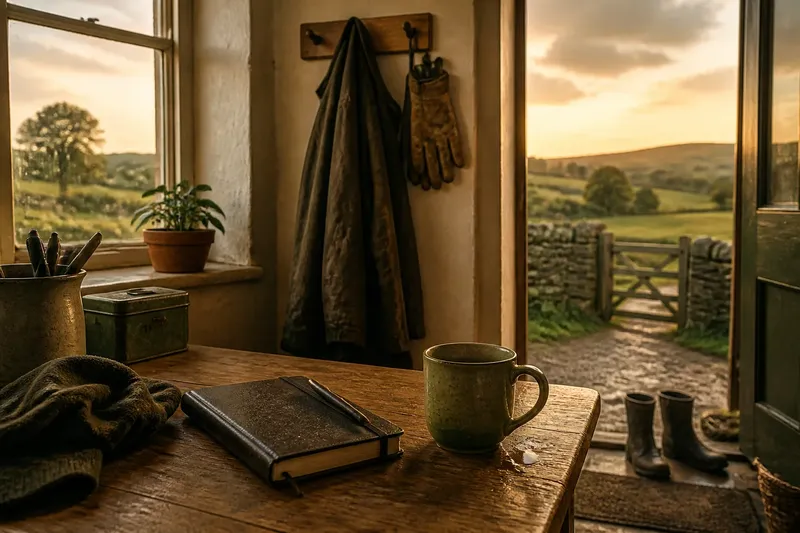
A cue works best when it is already close at hand and takes little effort. You might shut a notebook, hang a work coat on its peg, rinse a mug, or turn off a lamp. The action is ordinary; the meaning comes from letting it stand for an ending rather than a prompt to do more.
Think of it like putting a lid on a jar. The contents are still there, but they are no longer spilling across the worktop. Your unfinished plans do not disappear, and you do not need to feel calm on command. You are simply giving the day a visible edge.
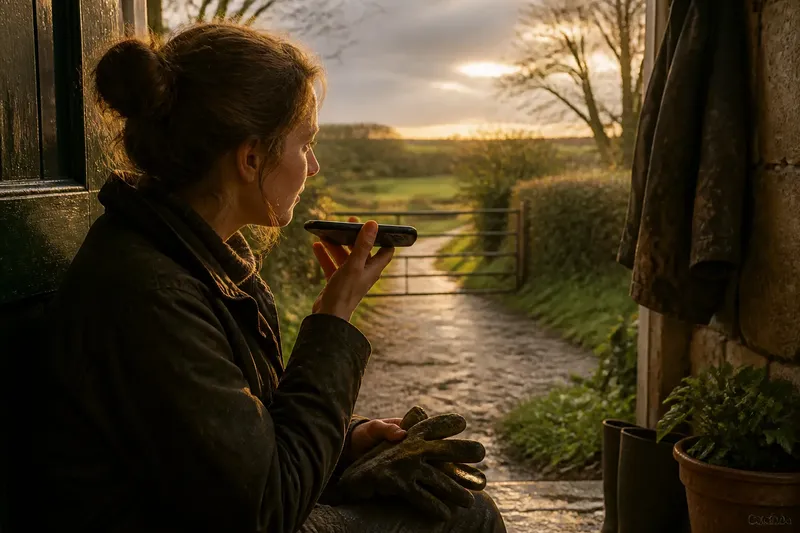
Pick a cue that fits the place where your work actually stops. If your paperwork lives on the kitchen table, closing a notebook may be more realistic than walking to a separate office. If your hands are cold or muddy after outdoor work, a practical change such as hanging up your gloves may carry more meaning than a written reflection.
A physical cue suits days shaped by place
A physical cue uses an object or small change in your surroundings. It can be particularly helpful when your work is tied to a location or a set of tools: close the shed door after ordinary work is finished, put the seed packets back in their tin, or set your laptop aside in its usual place.
This approach gives the eyes something to register. A coat on its peg or a notebook out of sight can make the transition easier to notice, especially when the same room serves for work and rest. Keep the action modest; a closing cue is not a request to make the whole space spotless.
Choose a physical action if you naturally respond to visible order or have a dependable object to put away. It may suit you less if the object is often needed again for family life or another task. In that case, use a cue that closes only your own part of the day, such as shutting your personal notebook rather than clearing the shared table.
A sensory cue suits days without a clear stopping place
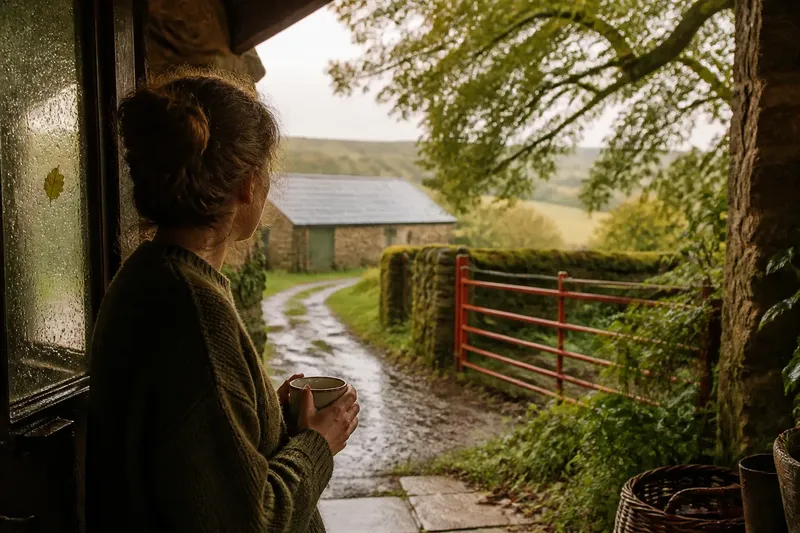
Some rural work has no neat last page. Weather can interrupt a job, animals need attention, and household tasks may continue after paid work ends. A sensory cue can mark a pause without pretending that every responsibility is finished: stand on the doorstep for a moment, notice the cooler air, or listen briefly to the evening sounds before going indoors.
Keep this distinct from a longer mindfulness exercise. There is no need to scan your body, list what you hear, or turn the pause into a test of concentration. Let one ordinary sensation be enough, then move on with the evening.
This option can suit someone whose work follows them mentally from room to room, or whose schedule changes with light and weather. It may be awkward in driving rain, in a rush, or when you need to stay close to a child or an animal. Have an indoor version ready, such as feeling your feet on the kitchen floor before putting the kettle on.
A spoken or written cue suits a mind that keeps reopening tasks
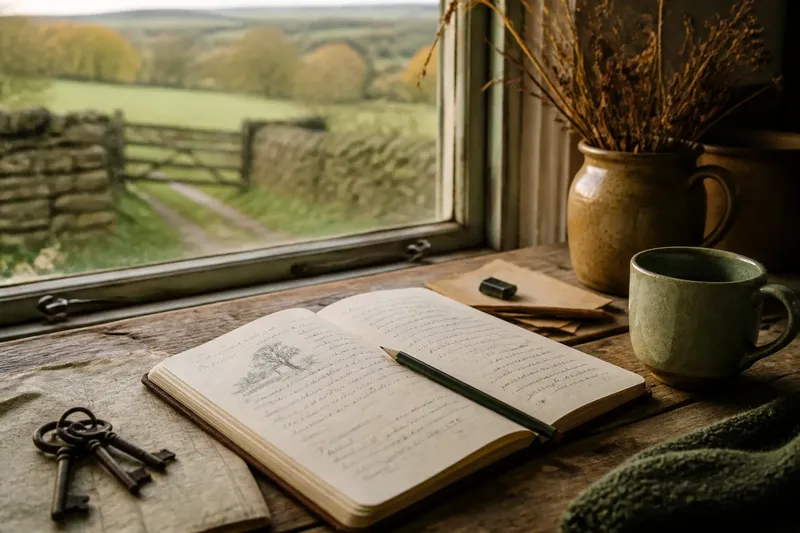
If your thoughts keep circling back to unfinished work, a brief written or spoken marker can help distinguish “not done” from “forgotten”. Close a notebook after writing one next action, or say aloud, “I’ll pick this up tomorrow after breakfast.” The cue is not a full review of the day; it is a small place to leave the thread.
A written note is useful when the next action is easy to name and you can put the notebook away afterwards. A spoken phrase may suit you better when writing feels like an invitation to keep planning. Either way, avoid building a long list at the point when you are trying to stop working.
Imagine you have been repairing a gate between showers and still need to fetch a hinge from the store. You write “check hinge size tomorrow” in the notebook, shut it, and hang your work coat on its peg. The expected observable result is simple: the next action is recorded, and the coat and notebook are no longer in your hands as you start making supper. The repair remains unfinished, but you have stopped carrying it as an immediate job.
Which closing cue fits your day?
What if the work is not actually finished?
Let the cue mean “I am stopping for now”, not “everything is complete”. If there is a clear next action, record just that; otherwise, choose a physical or sensory cue that marks the pause without asking you to solve the remaining work.
Can a household task be the ritual?
Yes, if it is already a small, natural endpoint, such as rinsing the mug you used at your desk. Avoid making a larger chore the price of feeling entitled to stop.
What if I forget the cue?
Do not add an alarm or a penalty unless that would genuinely help. Attach the cue to an existing moment, such as putting your work gloves away when you come inside, and let a missed day remain a missed day.
Should I use the same cue every day?
Repetition makes a cue easier to recognise, but the action can stay flexible. Choose one main signal and a simple alternative for days when the usual place or weather makes it impractical.
Choose by friction, not by how meaningful it sounds
To choose between the options, ask what tends to keep the day open. If you keep seeing work in front of you, try a physical cue. If your attention is restless because there is no clear boundary in the setting, try a sensory pause. If a loose end keeps returning to mind, use one written or spoken marker.
Then check the effort. Could you do it when tired, in muddy boots, or while someone else is waiting for you? If not, simplify it. A closing cue should fit the ordinary version of your life, not depend on a quiet room or an unusually unhurried evening.
Keep the cue for a while and notice whether it creates a recognisable transition. Perhaps you move more readily from the shed to the kitchen, or find it easier to leave a work thought for the morning. If the action starts to feel like another obligation, replace it with a smaller one.
A small threshold ritual does not need to make an evening peaceful or erase concern about tomorrow. Its useful promise is narrower: one chosen action can mark the point where you stop attending to work for now. Pick the cue that asks least of you, and let that be enough to close the day’s door.